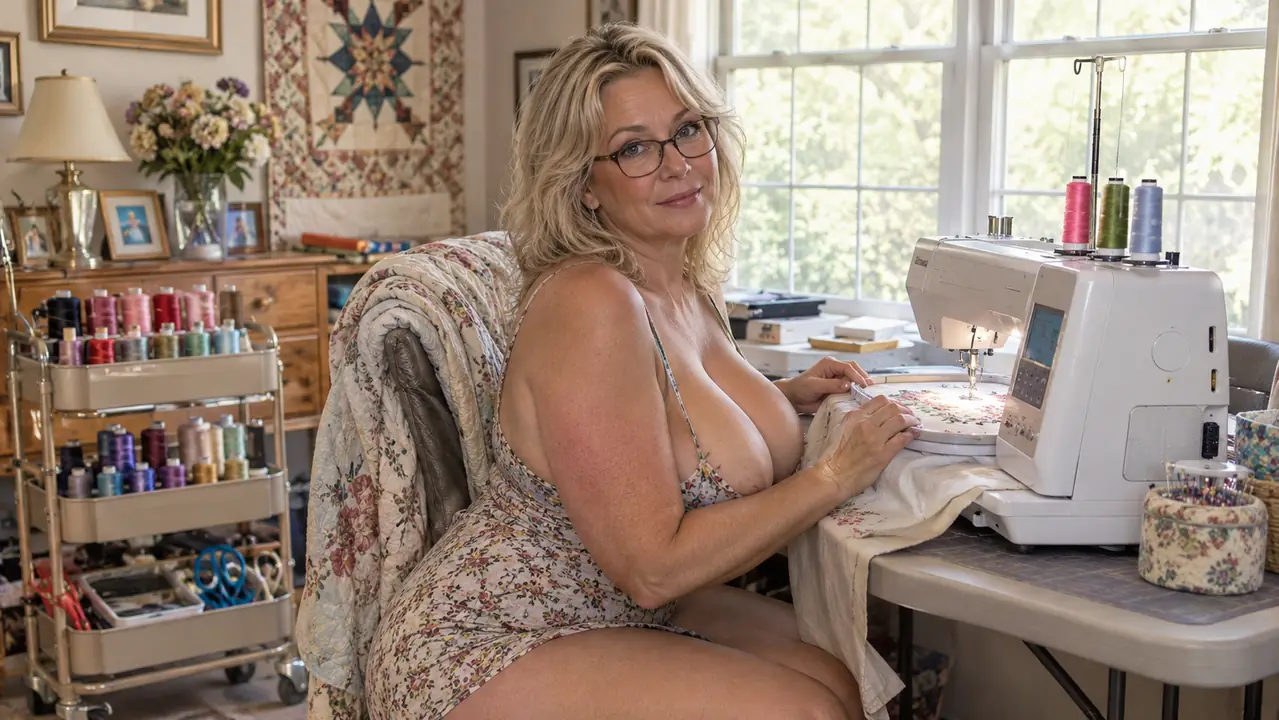
The first thing I embroidered on the Brother SE1900 was a hand towel I did not care about. That was on purpose. I bought the machine in October 2023, three months after I retired from the school office, and I had not touched a sewing machine since I was seventeen. My mother's old machine went to a neighbor decades ago. So I sat down at the folding table in the spare bedroom, put that scrap towel in the 5 by 7 hoop, and let it stitch a monogram I fully expected to ruin.
It did not ruin it. It was not centered either, and the back looked like a bird's nest, but the needle went up and down and letters appeared, and within an hour I understood this was something I could learn. Two weeks of practice on scrap towels later, I gave my granddaughter Lily a bath towel with her name on it and she carried it around the house like a flag. I have used the same machine most mornings since. Here is what months of that actually looks like, including the parts I do not love.
The Quick Verdict
A patient, solidly built combo machine that monograms and hems at the same table. Buy it for the 5 by 7 field and the built-in fonts, not for speed.
Amazon Check Today's Price →One hoop, one arm, one foot, and you are stitching by lunchtime
The 5 by 7 hoop, the embroidery arm and the embroidery foot all come in the box. That was everything I needed to make my first gift.
Amazon Check Today's Price on Amazon →How I've Used It
The machine lives on a six foot folding table against the window upstairs. Morning light is good in that room, which matters more than I expected when you are matching thread to fabric. The embroidery arm stays on eleven months out of twelve. Once a month or so I take it off, put a regular presser foot back on, and hem a pair of Dale's trousers or mend a seam. That is the whole reason I chose this machine over an embroidery-only model: one table, one plug, one set of habits doing both jobs.
Most of what I stitch is names and monograms. Hand towels and bath towels for church friends, fleece baby blankets, canvas tote bags, cloth napkins. I use the built-in fonts for nearly all of it. There are 11 embroidery fonts on the machine and I have honestly only learned four of them well: a plain block, a serif, a script for the girls' names, and a small alphabet I use on napkins because it stays legible when it is small. The 138 built-in designs I use less than I expected. A floral border shows up on a tote bag now and then, and that is about the extent of it.
When I want a design that is not built in, I download it on my laptop, put the file on a USB stick, and carry the stick to the machine. That is the entire transfer process. No app, no wireless, no account to keep track of. I plug it into the USB port, pull the file up on the 3.2 inch touchscreen, and stitch. After thirty years of managing other people's software in a school office, the lack of an app is a feature to me, not a shortfall.
November is my busiest month, and it is the one that taught me to keep a list. I pin a sheet of paper to the wall beside the table with each item and the name that goes on it, and I work down the list one hoop at a time. A set of six napkins takes me a morning if nothing goes wrong. Towels take longer, because terry cloth fights a hoop in a way flat cotton does not, and I have learned to slow the machine down on thick towels rather than let it run at the speed it wants. I do not keep a count of how many pieces go out the door in December. I know the list gets long, and I know I am glad when the fair is over.
What the 5 by 7 Field Actually Means Day to Day
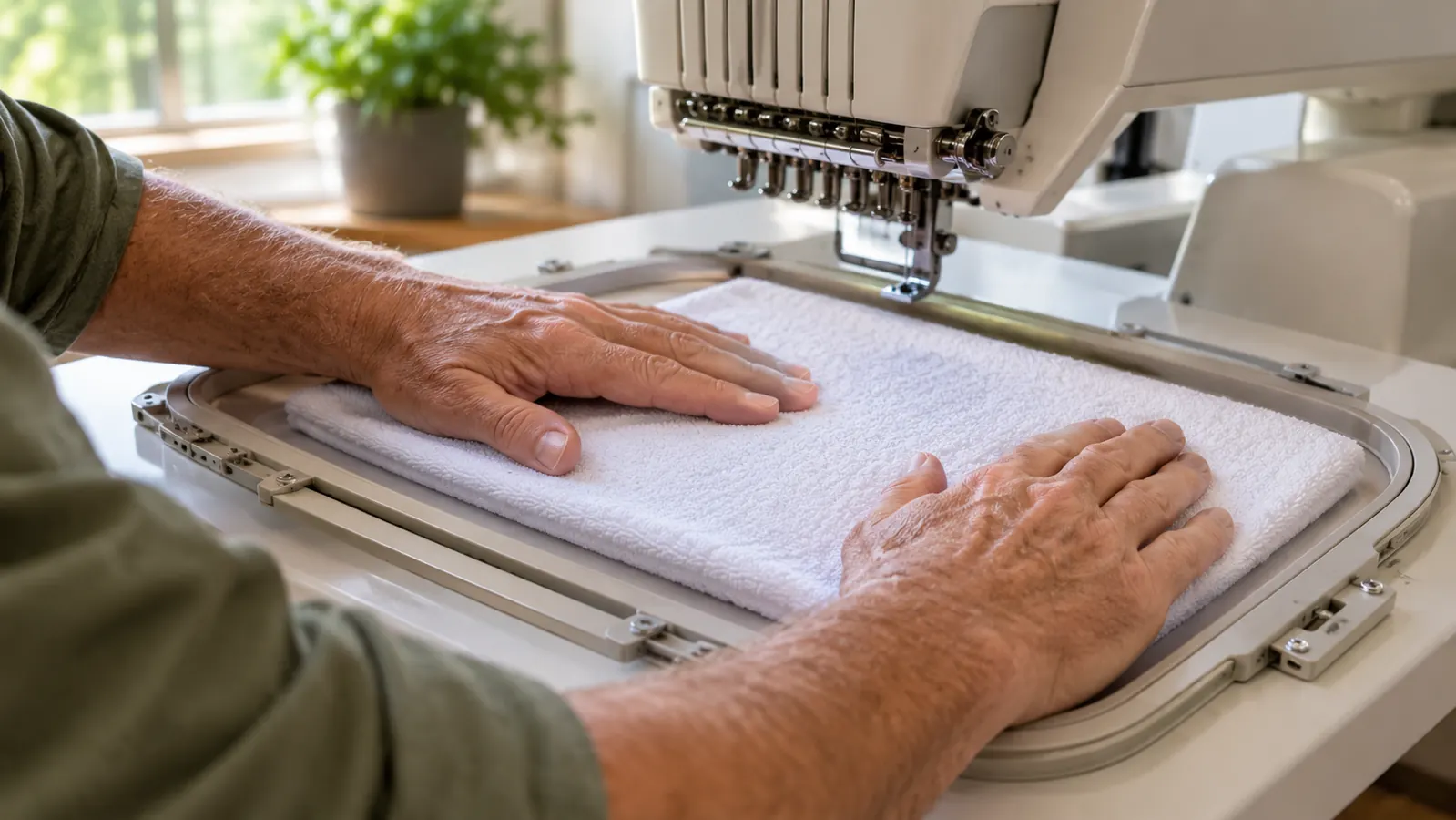
Five by seven inches is the whole embroidery field. That is the number to sit with before you buy anything. A hand towel monogram fits with room to spare. A bath towel wants a bigger letter than the field will hold at the size I would really like, so I stitch smaller and center it lower. A canvas tote bag front fits if the design is simple. A fleece baby blanket corner fits beautifully, and those have been my favorite things to make.
What does not fit is anything that sprawls. A large design across the back of a denim jacket, a full width border on a table runner, a big name across the back of a shirt. I do not make those things anyway, so the limit has cost me very little. But I want to be plain about it, because the sample photos online make the field look roomier than it is. If your plan is oversized designs, this is the wrong machine and no amount of practice will change that.
I measured once, because the numbers on a listing page do not mean much until you put a towel in your hand. A hand towel folded in half gives me about an inch of margin on each side of a three letter monogram set in the script font, which is comfortable. The same monogram sized to fill a bath towel runs past the field edges and simply does not fit. What I do instead is stitch the name smaller and place it in the lower third, which looks deliberate and has never drawn a complaint. My first attempt at a bath towel had letters sized for a much bigger field, and I had to start over with a smaller alphabet and a fresh sheet of stabilizer. That lesson cost me an hour.
The flip side of a small field is that a small field is forgiving. Short stitch-outs mean fewer thread breaks, less hoop shift, and less to rip out when something goes wrong. My longest single design runs a little over twenty minutes. That fits neatly between other things. I can start a set of four napkins in the morning and have them folded and stacked by lunch.
The Two Things That Annoy Me
The machine does not trim jump stitches. When a design moves from one letter to the next, it carries the thread across the gap and leaves a jump behind. Somebody has to cut those. That somebody is me, with the spring snips on a ribbon tied near the handle. On a three letter monogram it is nothing. On a design with a dozen color changes it is a real part of the job, and it is the reason I stopped taking on fussy designs for other people.
Some designs are worse about it than others. A two letter monogram in the plain block font is nearly all satin stitch and leaves very little to cut. A script name with a connecting tail leaves a long carry from the first letter to the last, and I have learned to cut as the machine goes rather than wait for the end. When I wait, the carried thread gets caught under the next section and I have to pick it out with the curved scissors, which is fussy work in that light. The snips live on a ribbon tied to the handle for exactly this reason. Kitchen scissors were what I used for the first month and they were wrong for the job: too long, too clumsy, and I was forever missing the thread.
The other annoyance is the field itself, which I have already gone on about. I will only add that the 5 by 7 hoop that ships in the box is a good hoop and I still reach for it first. It is the stitching area I am complaining about, not the hardware.
That is the entire list. No repair, no service visit, no skipped stitches I could not cure by rethreading. The advanced needle threader has worked every single time I have used it, and the drop-in top bobbin is easy enough that I change one without thinking about it now. The machine weighs 22.1 pounds, light enough that I carried it to the kitchen table when the window was being replaced, heavy enough that I did not enjoy the trip.
Stabilizer, Thread and Hoops: What I Actually Use
I bought HBI tear away stabilizer in the same order as the machine and I am on my third pack. It comes as precut 10 by 12 inch sheets, 100 to a pack, and it is meant for low to medium density designs, which is all I do. One sheet goes under a towel with a clear water-soluble topper on top to keep the loops from popping up through the terry. Thick bath towels get two sheets doubled. Baby blankets and tote bags get one.
Two things about stabilizer took me a while. The first is that a tear away sheet is meant to be torn away, and I was cutting it out with scissors for the first several months, which is slower and leaves a rougher edge. The second is that doubling a sheet changes how the fabric behaves under the needle, and on a thick bath towel I would rather double than try to stretch one sheet across a wider area. Tearing the excess away after stitching takes a minute, and I do it over the wastebasket with the towel still slightly warm from the machine. The topper I buy generic and in bulk, a plain water-soluble roll from the craft store, and it has never given me trouble.
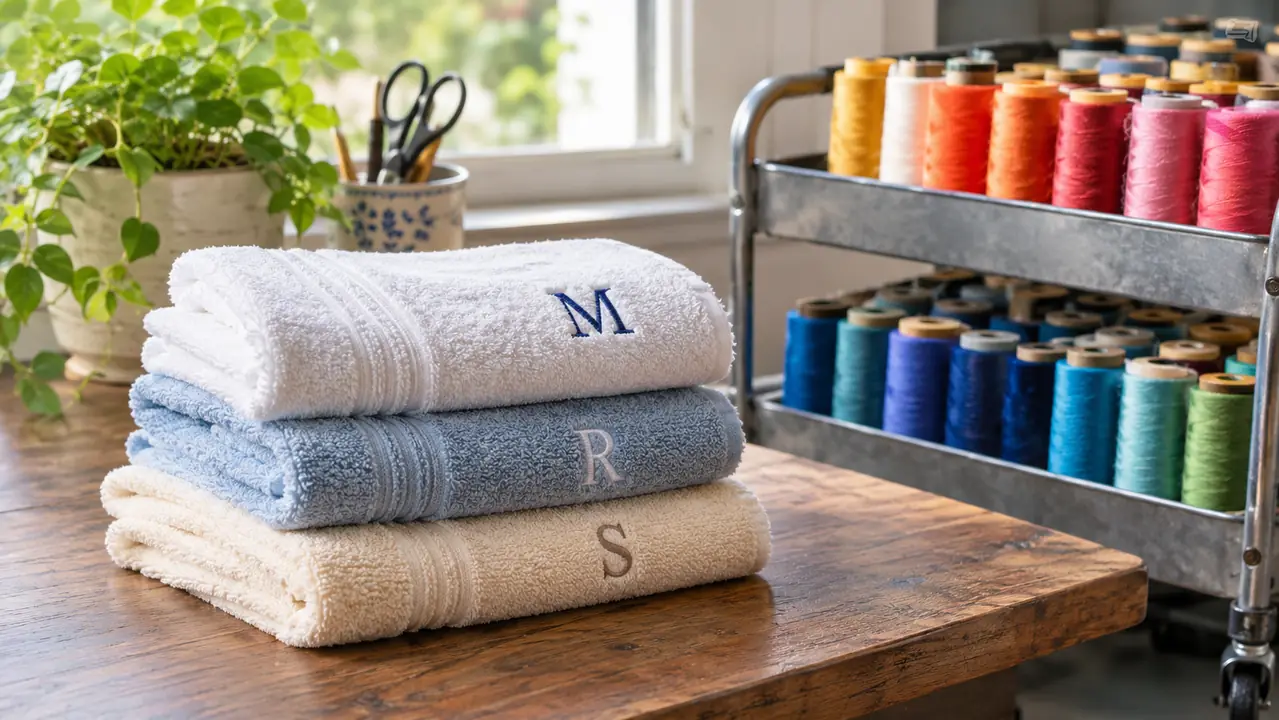
For thread, I started with a few Brother-branded spools, used them up inside a month, and moved to a 40 color polyester kit with 500 meters on each spool. Colorfast through hot washes, which matters because these towels get used. The spools sit on the rolling cart in their own box, sorted by the chart that came with them. Navy, white, a soft pink and a light blue for baby things, and gold do almost all of my work. A few spools let thread slip off the top and puddle, so those get a thread net and stop doing it.
The hoop set changed how the workday feels more than anything else I bought. Four plastic hoops with grids and metal screws, sized 1 by 2.5, 4 by 4, 5 by 7 and 5 by 12, made to fit Brother 5 by 7 machines. The 4 by 4 handles hand towel monograms and the second 5 by 7 lets me hoop the next item while one is stitching, which is the difference between a steady morning and a lot of standing around. The little 1 by 2.5 has done a handful of names on baby bibs. The 5 by 12 has never been used, because the field is 5 by 7 and it cannot be. It hangs on the buckle hook beside the table looking hopeful.
What It Is Like to Learn On
The Brother SE1900 is gentle with a beginner in the ways that count. The touchscreen is big enough to read at arm's length without hunting for my glasses. Threading is a matter of following the numbered path once and then remembering it. The built-in fonts give you something worth stitching on day one, so you are not hunting files before you have learned to hoop.
What is hard is everything around the machine, and no machine fixes it. Hooping evenly. Keeping fabric taut without stretching it. Centering a name on a towel so it does not sit an inch low. Learning to leave the fleece alone instead of over-tightening and pressing hoop marks into it, which is why I take blankets out right after stitching. None of that is the machine's fault, and all of it took me longer than two weeks to get right.
I have never needed a repair and I have never taken it in for service. It has been on that table through two Decembers of craft fair orders at St. Peter's and it starts up the same way every morning. For a machine I bought with my own money and expect to keep, that steadiness is most of what I wanted.
What I Liked
- Monograms and everyday mending happen on the same table with the same machine
- 138 built-in designs and 11 embroidery fonts, so there is something worth stitching the day it arrives
- Advanced needle threader and drop-in top bobbin are genuinely easy, not just easy on paper
- 3.2 inch touchscreen is readable at arm's length without reading glasses
- 22.1 pounds, so it can move when the room needs to be something else
Where It Falls Short
- The 5 by 7 inch field rules out large designs entirely
- No automatic jump stitch trimming, so you cut them by hand with snips
- Files transfer by USB stick only, so there is no app and no wireless
- A combo machine does two jobs well and neither one at production speed
The machine does not trim jump stitches. Nobody mentions that at the store. You trim them, one at a time, with small snips, and that is simply part of the job.
Who This Is For
This is for the person who wants names on things. Towels, blankets, napkins, tote bags, a bib for a grandchild. If your idea of a good morning is a stack of hand towels with initials on them and a hemmed pair of trousers in the same hour, the Brother SE1900 was built for exactly that. It also suits anyone who, like me, has a spare bedroom, one outlet strip, and no interest in a second machine for sewing.
Who Should Skip It
Skip it if your designs are large. Jacket backs, table runners, oversized names, anything that wants more than five by seven inches of stitching area. Skip it if you cannot stand hand trimming jump stitches, because you will be doing that constantly. And skip it if you want files to arrive wirelessly from a phone, because they will not. Buying this and then resenting it for the field size is a waste of a good machine and a good chunk of your patience.
Start with one hoop, one towel, and a free morning
That is how this began for me, and it is still how most of my weeks start. The 5 by 7 hoop, the embroidery arm and the embroidery foot are in the box. The rest is practice.
Amazon Check Today's Price on Amazon →