
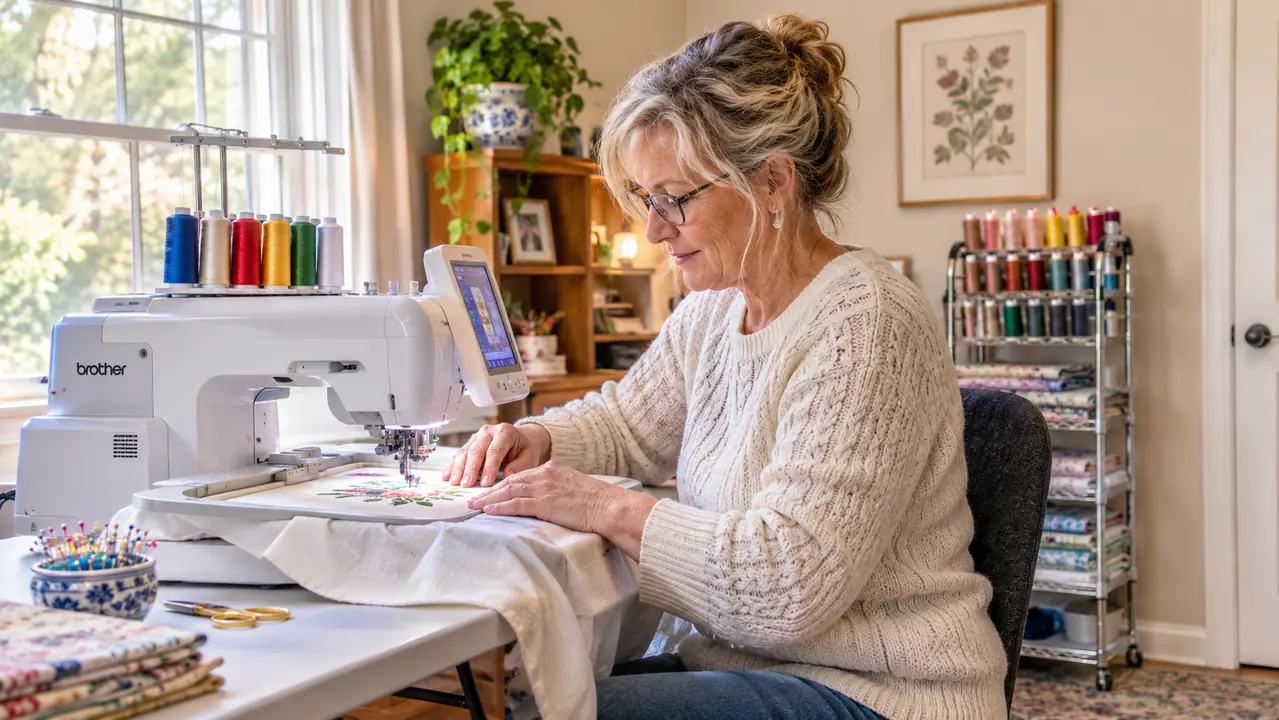
The short answer first, because it is what I would want if I were the one reading. If you own a Brother with a 5 by 7 field and you hoop towels, blankets and totes on a folding table by a window, the Sew Tech four hoop set does more of the everyday work. If your work runs to thick bath towels and fleece, and you hoop the same item over and over in one sitting, magnetic hoops are the better tool. Most of us are the first case, saving up for the second.
I bought the Sew Tech set in March 2024, five months after I started machine embroidery. I had retired the summer before, bought a Brother SE1900 in October 2023, and was getting by with the single 5 by 7 hoop that came in the box. What pushed me to buy was not the sizes so much as the second 5 by 7. One item could be stitching while I hooped the next, which on a Saturday with three towels to finish is the difference between a pleasant morning and a rushed one. The 4 by 4 turned out to matter just as much. Hand towel monograms fit it exactly, and the fabric sits flat in it instead of being rolled up and clipped out of the way.
| Sew Tech Hoop Set | Magnetic Hoops | |
|---|---|---|
| Sizes in one purchase | 1x2.5, 4x4, 5x7 and 5x12, each with a grid | One size per hoop, so a set means several separate purchases |
| Hooping speed | Adjustable metal screw, and thick towels need a small screwdriver to get truly tight | Closes in seconds, no tools at all |
| Hold on thick terry and fleece | Firm once the screw is tight, but overtightening is what causes hoop burn | Even pressure around the whole frame, easier on thick fabric |
| Lining a name up straight | Clear grid markings on all four hoops | Grids vary by maker, and some frames carry none |
| Working through a stack of items | Two 5x7 hoops, so one stitches while you hoop the next | Needs a second magnetic frame, bought separately |
| Fit for a 5 by 7 Brother field | Listed for Brother 5x7 machines, including the SE1900 | Fits if you match the frame size to your field |
| Storage between projects | Hangs on the buckle from a hook beside the table | Frames stack flat, but they grab anything steel nearby |
| Magnets in the sewing room | None at all, nothing to keep clear of the bobbin area | Keep them away from the machine and from pins |
| Repositioning mid project | Loosen, nudge, retighten | Lift, reset, check the registration again |
Where Sew Tech Hoops Win
The sizes, plainly. Four hoops, each with a grid, from 1 by 2.5 up to 5 by 12, all with the adjustable metal screw and the hanging buckle. On my machine the 4 by 4 and the second 5 by 7 do almost all of the work. The 4 by 4 is right for the monograms I put on hand towels. The second 5 by 7 keeps the table moving. I have used the 1 by 2.5 a handful of times for a short name on a baby bib, and it is the only thing I own that will do that job neatly. Four sizes in one purchase is the honest advantage here, and it is not a small one.
The grids earn their keep too. Lining a name up on a bath towel, a quarter inch off is visible from across the room, and the markings give you something to count from instead of eyeballing it. The adjustable screw holds a folded towel firmly. It needs a small screwdriver to get truly tight on a thick towel, which is the one annoyance I have with the set, and there is a driver in the table drawer because of it. The buckle is a quiet convenience. My four hoops hang on a hook beside the table instead of living in a pile under it, and I can see at a glance whether one is still out.
Where Magnetic Hoops Win
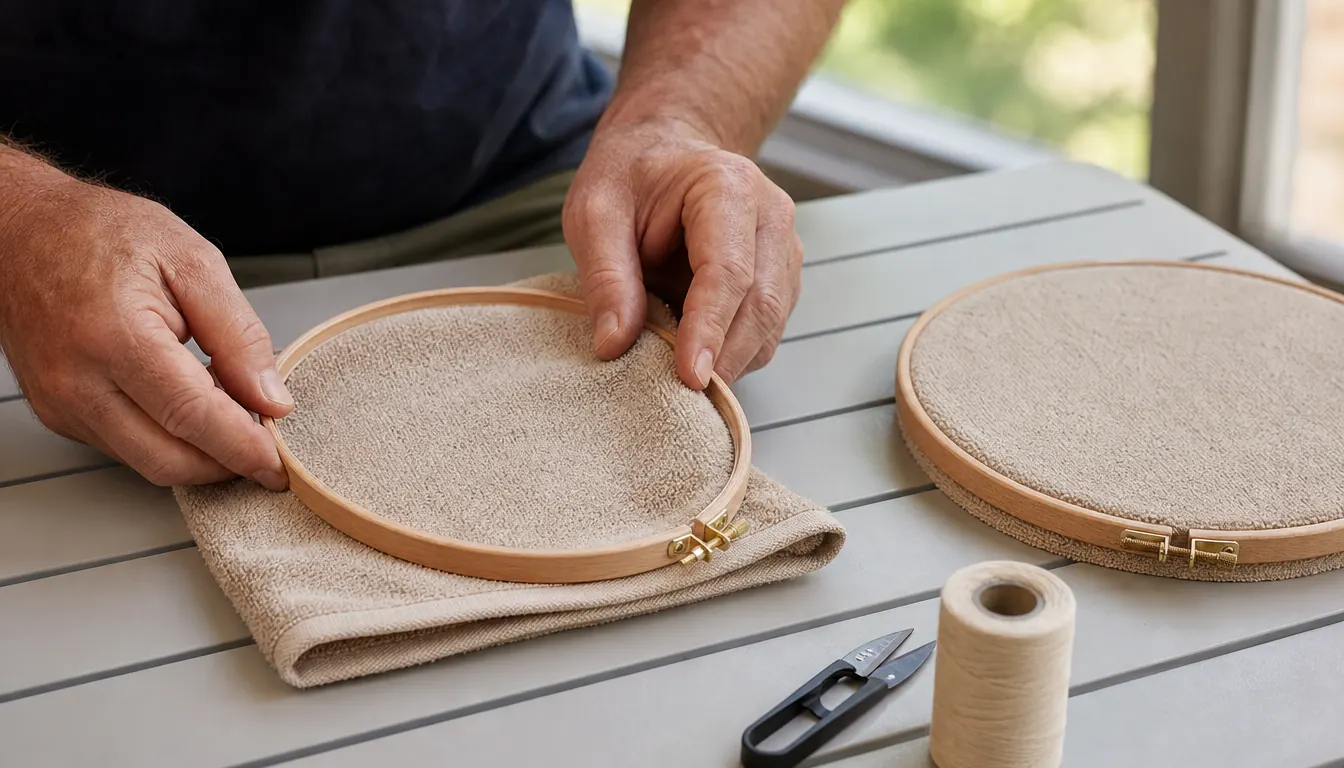
Speed, and I will not pretend otherwise. A magnetic hoop closes in seconds. No screwdriver, no loosening, no retightening, no wondering whether the fabric shifted while you pulled one side home. If you are hooping the same item type over and over, the hooping step stops being the slow part of the evening. The pressure is also more even around the frame. With a screw hoop you pull one side tight and hope the other side matches. With magnets the frame closes all at once and the fabric is held the same way all the way around.
That even pressure is the part that would matter most in my own sewing room. I make fleece baby blankets as gifts and for the church, and fleece is where I have to be careful. Press too hard and you leave a mark that does not come out, so I hoop loose and take the blanket out right after stitching. A magnetic hoop is gentler on that. I have never owned one. I watched a woman two tables over at the December craft fair hoop a thick bath towel in hers while we talked, and she was finished before I had my fabric squared up. That is the whole of my firsthand knowledge, so weigh it as such.
There is a second thing the magnetic kind does well that never shows up in a size chart. When you move from item to item, the frame goes on and comes off with no tool in your hand, so you are less tempted to leave a hoop half tight and come back to it. I have done exactly that with a screw hoop at nine at night, and I paid for it the next morning with a name that sat crooked on a good towel. Care is still required. Magnets go where they are put, and you find out quickly whether you squared the fabric properly before you closed the frame.
Four sizes, one purchase, and a second 5x7 to keep the table moving
The Sew Tech set covers 1x2.5, 4x4, 5x7 and 5x12, each with a grid, an adjustable metal screw and a hanging buckle. It is listed for Brother 5x7 machines including the SE1900 and carries a 1 year warranty. Check today's price on Amazon.
Amazon Check Today's Price on Amazon →What Magnetic Hoops Would Change in My Sewing Room
If I hooped ten of the same thing in an evening, I would own a magnetic hoop already. My week does not look like that. It is two hand towels for a friend at church, then a fleece blanket for Lily, then a canvas tote for the craft fair table in December. The item changes, the size of the design changes, and with it the hoop. Magnets do not remove the changeover. They shorten each hooping, which is a real saving on volume and a smaller one on a mixed week like mine. That distinction is the whole decision, and it is worth sitting with for a minute before you spend anything.
Storage is the other half of it. My hoops hang on a hook and I can see all four at a glance. Magnetic frames stack flat, which is tidy, but they hold onto anything steel that comes near them, and I keep pins, a seam ripper and a small driver in the drawer under the table. I would want a shelf or a box with a lid for them, well away from the machine and the bobbin area. That is not a reason to avoid them. It is a reason to plan where they live before they arrive, the same way you would plan where a new iron goes.
The Hoop That Stays on the Buckle
The 5 by 12 has never been used. My machine's field is 5 by 7, so a design cannot reach the ends of it. That is not a fault in the set, and I knew it when I bought it. If you have a machine with a larger field, that hoop is the one that lets you stitch across the width of a bath towel without repositioning, and it would earn its place quickly. On a 5 by 7 machine it is the hoop that hangs there. I mention it because the product photos make the biggest hoop look like the main event, and for a good many of us it is not.
One item could be stitching while I hooped the next, which on a Saturday with three towels to finish is the difference between a pleasant morning and a rushed one.
Two and a Half Years In
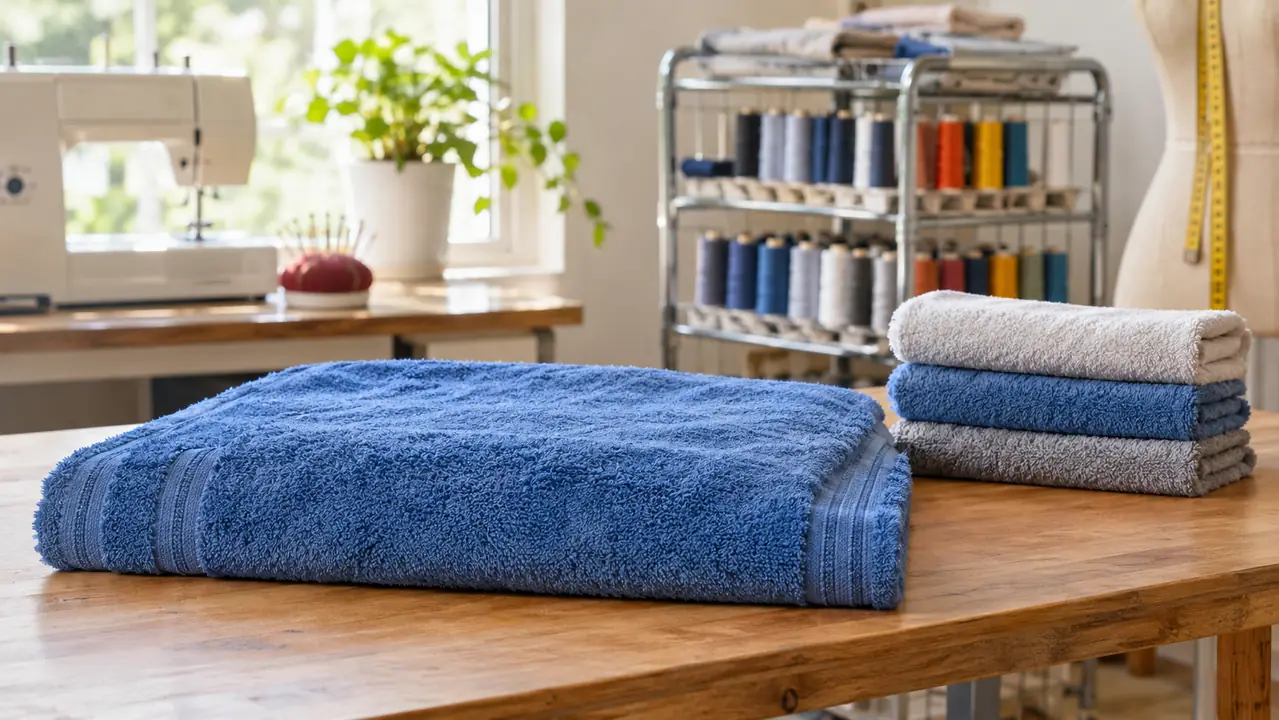
I have not been gentle with the set. The hoops live on a hook where the morning sun hits them, they have been tightened onto thick towels and fleece and canvas, and the screws have been turned a great many times. Nothing has cracked, nothing has stripped, and the grids are still readable. The screw threads are the part I watch, because a plastic hoop that will not tighten is a hoop you throw away. So far they are fine, and I would say the same to your face at the craft fair table.
What I would change is the screw head. A thumb screw you could tighten by hand on thick fabric would remove the one annoyance and the small driver in my drawer. That is a modest complaint about a set that has done what I asked of it. If Sew Tech ever changes that, I will buy the new version the same week and hand these down to Lily when she is old enough to be trusted with a needle.
Who Should Buy Which
Buy the Sew Tech set first if any of this sounds like your week. One machine with a 5 by 7 field. A mix of items rather than a run of the same thing. Names and monograms on towels, where lining up matters. A work surface that has to be cleared at the end of the day, because four hoops on one hook take up less room than four hoops in a box. And a budget that needs to go further on thread and stabilizer than on hoops. The set is the plain, useful choice, and it has held up in my spare bedroom without a bent frame or a stripped screw.
Buy magnetic hoops instead, or next, if your work is narrow and repetitive. Thick bath towels, one after another, in the same size. Fleece, where you are forever fighting hoop burn. Hands that find a small screwdriver awkward, which at fifty eight I understand better than I did at forty. A machine with a field bigger than 5 by 7, where a single magnetic frame would cover the size you actually stitch. In that room, the speed and the even pressure are worth buying frame by frame, even though it takes a few purchases to build a set.
What I Would Check Before You Buy Either One
Match the hoop to the field, not to the design you admire. A 5 by 12 hoop on a 5 by 7 machine is a paperweight. The same applies to a magnetic frame, and it is the mistake I hear about most from people who bought one size and found it wrong for the work they do. Second, check what the set actually includes. The Sew Tech set lists four grids and a hanging buckle, which reads like small print and is not. A hoop with no markings is harder to use than a hoop with them, and you will feel the difference the first time you line up a name.
Third, decide where the hoops will live before they arrive. Mine hang on a hook, and that hook is the reason I reach for the 4 by 4 as often as I do, because it is the first thing I see when I sit down. Fourth, be honest about the fabric. Thick terry and fleece are the two that decide whether a screw hoop or a magnetic hoop is right for you. Everything else, cotton towels, canvas totes, cloth napkins, is easy in either one. If you have never hooped anything before, start with the screw type. The feedback is plainer and it teaches you how tight is tight enough.
Start with the sizes. The magnets can wait.
Four hoops with grids and adjustable screws, listed for Brother 5x7 machines, hung on a hook and used most weeks since March 2024. That is the recommendation, plainly, from someone who buys her own supplies. Check today's price on Amazon.
Amazon Check Today's Price on Amazon →