The part nobody warns you about is not the stitching. It is the deciding. I spent most of September 2023 with two browser tabs open and a legal pad, trying to work out whether a combo machine or an embroidery-only machine made sense for a retired school office manager in Spokane who had not touched a sewing machine since high school. I bought the Brother SE1900 in October 2023 with my own money. Three years and a great many towels later, here is the version of this review I wish somebody had handed me.
This is not a love letter and it is not a takedown. It is the honest list: what the machine does well, what it does badly, and which of those two things matters more depending on what you plan to make. I embroider monograms and names on hand towels and bath towels, fleece baby blankets, canvas tote bags and cloth napkins. I do not have an online shop. I am not going to tell you this machine will pay for itself. I am going to tell you what it feels like to sit down at it on a Tuesday morning, and what still irritates me after three years of use.
The Quick Verdict
A capable combo machine that earns its place on the table, provided you accept a 5 by 7 inch field and plan to trim jump stitches by hand for as long as you own it.
Amazon Check Today's Price →See exactly what comes in the box before you decide
One 5 by 7 inch hoop, the embroidery arm, the embroidery foot and eight presser feet. The Brother SE1900 ships with everything you need for the first project. Check the current listing and today's price on Amazon.
Amazon Check Today's Price on Amazon →How I Actually Use It, Week to Week
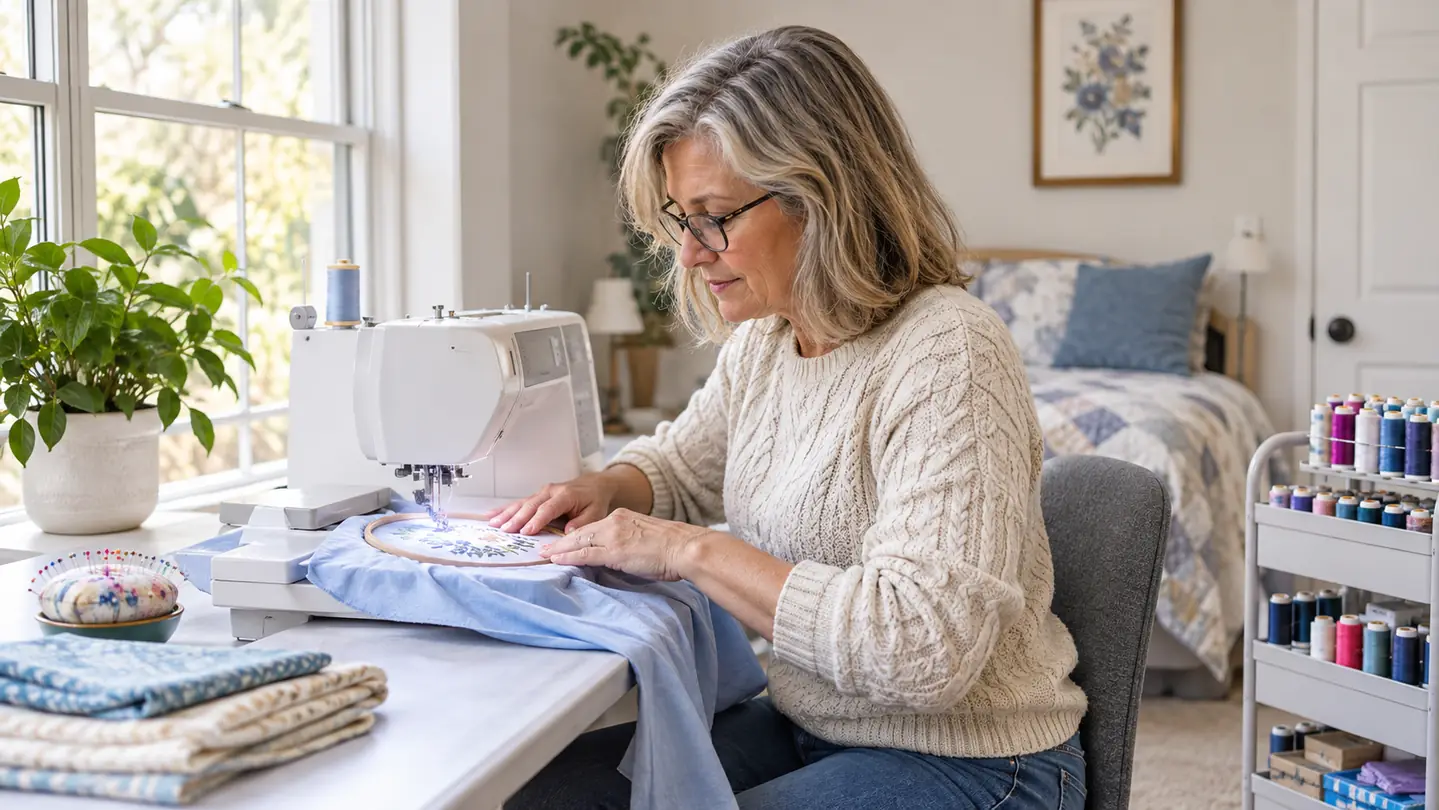
The machine sits on a six foot folding table by the upstairs window in what used to be a spare bedroom. I leave the embroidery arm on most of the time and take it off maybe once a month when something needs hemming. That is the entire reason I picked a combo over an embroidery-only machine. I wanted one machine that could put a name on a bath towel on Monday and take up a pair of Dale's trousers on Saturday, without me needing to own two machines in a room with one outlet strip.
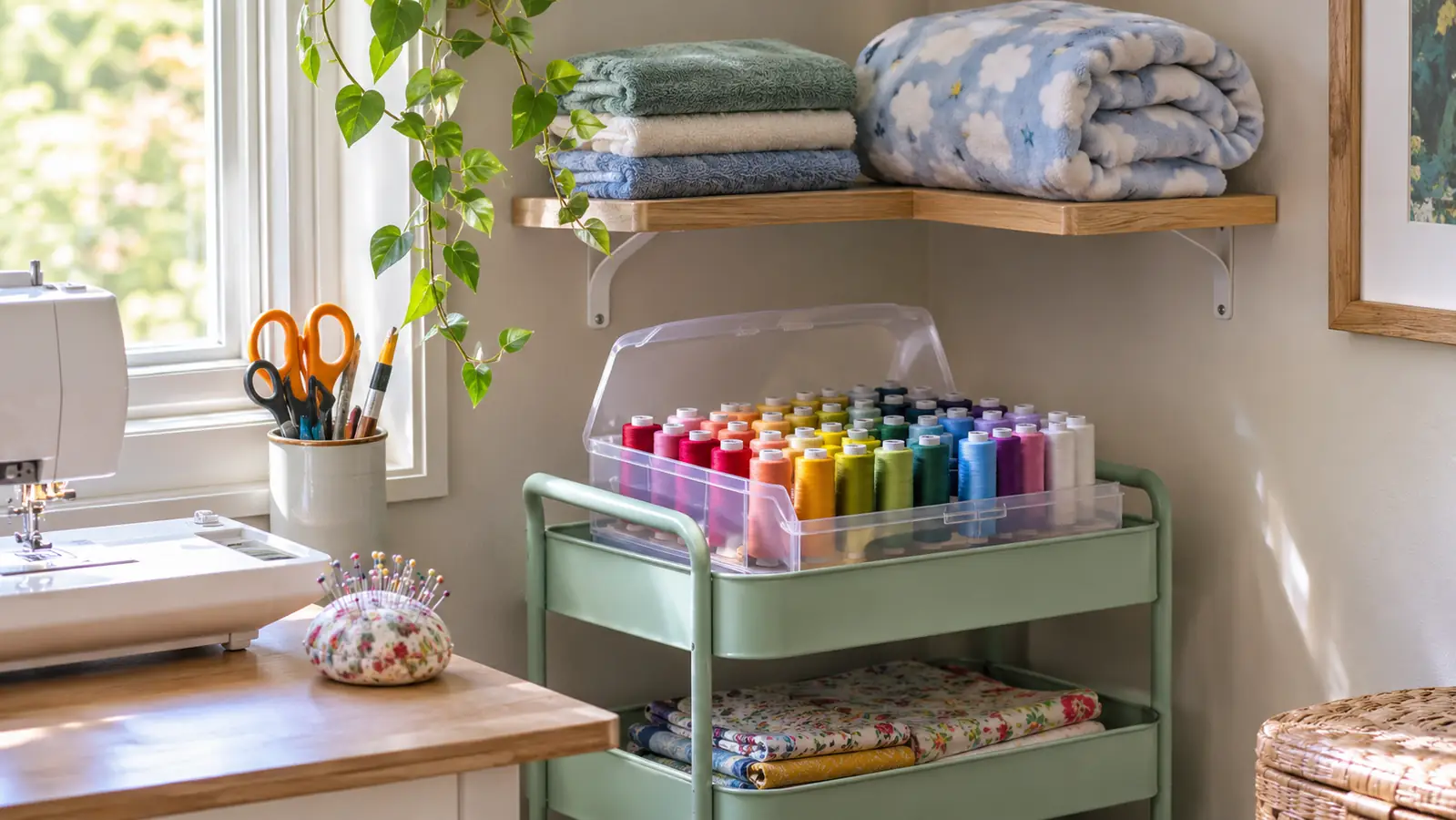
Most mornings I am running the built-in fonts rather than the built-in designs. A morning at the table usually gets two or three towels done, start to finish, hooping included. My thread lives on a rolling cart beside me, sorted by the color chart, so I am not getting up and down hunting for navy or gold. That small bit of organization did more for my enjoyment of the machine than any accessory I have bought.
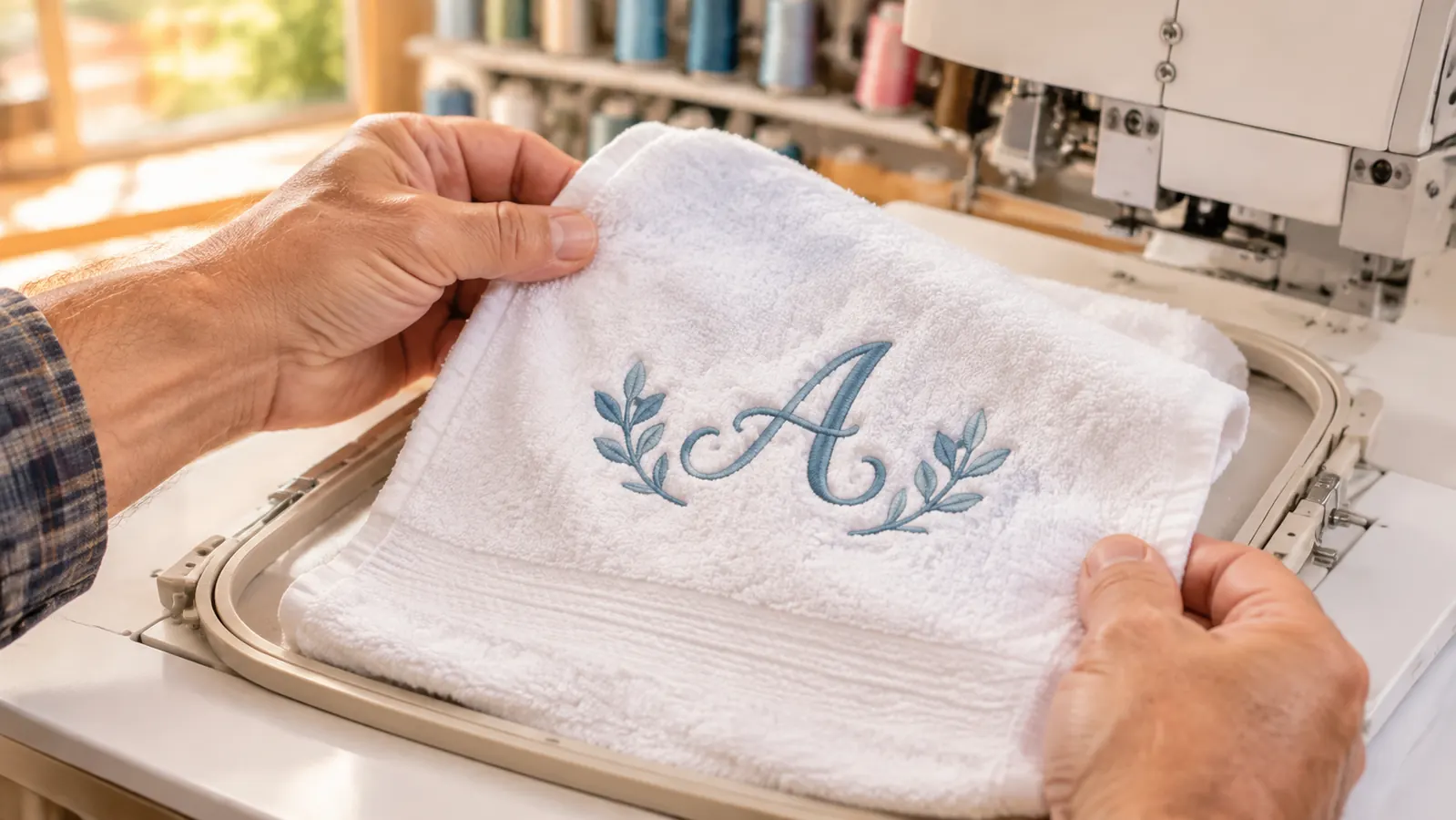
Take last Tuesday, which was as ordinary as they come. I had three white hand towels to monogram for a woman from church whose granddaughter was being baptized, and I wanted them done before lunch. I was at the table by eight with the window light coming in from the left, which is the best light in this house. I hoop one towel at a time, one sheet of tear away under it, the water-soluble topper laid over the top and smoothed flat with my palm. Three letters, navy, the same serif I use for nearly everything. Two of the three were folded and stacked by half past eleven. The third needed re-hooping because I had it a half inch off center, and I could see that before I started, which is the whole trick.
The 3.2 inch LCD touchscreen is the part I expected to dislike and did not. It is small, but the menus are laid out in a way that made sense to me by the second week, and I have never once had to stop mid-project and go find the manual. The advanced needle threader works every time, which matters more than it sounds like it should when your eyes are fifty-eight years old. The drop-in top bobbin is easy to load, and I have not had a single bobbin tangle that was the machine's fault.
The Two Things That Genuinely Annoy Me
The 5 by 7 inch embroidery field is the first one. It is not a defect exactly, it is a design choice, but it does mean anything larger than a hand towel has to be planned around or split. A bath towel monogram fits comfortably. A name across the whole back of a fleece blanket does not, not in one pass. I have learned to design within the field and I mostly do not think about it anymore, but a person who walks in wanting to embroider large quilt blocks is going to hit that wall in week one and be annoyed about it.
The second is jump stitches. The Brother SE1900 does not trim them for you, so every time a design travels from one letter to the next, you get a thread crossing the back and you cut it yourself. I do it with a pair of five inch spring snips on a ribbon tied near the handle, always within reach. It is a short bit of fussy work per item and I have made peace with it. But if you are the sort of person who resents fussy work, this will wear on you, and no amount of reading the manual will persuade the machine to do it.
The Learning Curve, Honestly
People say two weeks and I think that is about right, with a caveat. I spent my first two weeks on scrap towels from the thrift store and I ruined a fair number of them. Not ruined as in broken. Ruined as in puckered, off center, and one memorable monogram that came out mirrored because I had not thought through the hooping. That is the real curve. The machine itself is not hard to operate. Getting a towel flat and square and centered in the hoop is the skill, and it takes repetitions.
The first thing I made that left the house was a hand towel with Lily's name on it, in November 2023, after about two weeks of scrap fabric. It came out fine. What I remember is everything before it. The puckering on the first three attempts because I had used one thin sheet of tear away on a thick towel and told myself it would be fine. The name that sat an inch and a half too low because I had eyeballed the placement instead of measuring from the corner of the towel. The towel I hooped so tightly that the fabric sprang when I lifted it out. None of that is the machine misbehaving. All of it is me learning where the middle of a hoop is.
If you have sewn garments before, some of it comes back. I sewed as a teenager, stopped for decades, and my hands remembered tension and seam allowance faster than my head did. But machine embroidery is its own separate thing. The stabilizer matters, the hooping matters, the order the colors stitch in matters. Two weeks of practice on throwaway fabric got me to the point where I would hand something to a friend without apologizing for it. Before that, no.
Stabilizer deserves its own mention because it is the piece nobody explains well. I use precut tear away sheets under the towel and a clear water-soluble topper on top. Thick bath towels get two sheets doubled up. Baby blankets and tote bags get one. A single sheet is thin for a dense design on a heavy towel and you will see the fabric pull if you try to save one. That is a lesson I learned on a towel that now lives in the back of the linen closet, and it is why I keep a third pack on the corner shelf.
One more small thing that is not a machine complaint but took me a blanket to learn: fleece will take hoop burn if you over-tighten it. I hoop the baby blankets loosely now and take them out of the hoop right after the stitching stops rather than letting them sit while I answer a text. Nobody tells you that, and the marks do not come out.
The machine itself is not hard to operate. Getting a towel flat and square and centered in the hoop is the skill, and it takes repetitions.
What the 138 Designs Are Actually Good For
Here is the part the listing oversells a little. The 138 built-in designs are lovely to look at, and I have used maybe fifteen of them with any regularity. What I use constantly, every single week, is the 11 embroidery fonts. Monogramming is the whole job for me. Three letters in a clean serif on a white hand towel is what people ask for, and the built-in fonts handle that without any file fussing at all. If you are buying this primarily for the design library, look closely at what is in it before you commit.
For anything outside the built-ins, I move designs from my laptop to the machine on a USB stick. That works fine and it is how I have done it since the beginning. There is no app and no Wi-Fi here, and I do not want either one in a sewing room, so I have never missed them. But if you are picturing yourself sending a design from your phone while you sit on the couch, that is not this machine, and it is worth knowing before you buy rather than after.
The 240 built-in sewing stitches and the ten styles of auto-size buttonholes are the half of the machine I use least and am still glad exists. Hemming, mending, the occasional buttonhole on a cushion cover for the church hall. The eight included feet cover what I need. I have not bought another foot and do not plan to, and the machine has never needed service or repair in three years.
Sewing Again, Which Is Why I Chose This One
I get asked why I did not buy the PE800, which is embroidery only and has the same 5 by 7 inch field. I have never owned one, so I will not pretend to review it. My reasoning was simple and personal: I owned no sewing machine at all. My mother's old machine went to a neighbor decades ago. Buying an embroidery-only machine would have meant buying a second machine the first time a hem needed fixing, and I did not want two machines sharing one spare bedroom.
That turned out to be the right call for me. The embroidery arm comes off and goes back on easily, and the sewing side is a perfectly ordinary sewing machine with a 25 year limited warranty behind it. It weighs 22.1 pounds, so it stays where you put it. The machine measures 23.19 inches deep by 13.43 inches wide, which is more table than I expected. Measure your surface before you commit, because a narrow desk will not hold it and the arm needs room to travel.
The hemming is more of the machine's life than I expected. Dale's work trousers, curtains for the church hall, a cushion cover I made a mess of and then fixed, the table runner that has needed re-hemming twice because I keep letting it drag on the floor. Taking the embroidery arm off takes a moment and it goes back on the same way. The one thing I would tell anyone is to keep the manual in the table drawer rather than the closet, because threading the sewing side after two months of embroidery-only work is the one spot where I have had to look something up twice.
What has surprised me most is how ordinary it has become. I do not think about the machine anymore. I think about whether the towel is straight. That is the highest compliment I can pay a piece of equipment: three years in, it is furniture. It does its job, it does not ask for anything, and the only friction left is the trimming and the size of the field, both of which I knew about going in.
What I Liked
- 11 embroidery fonts that handle everyday monogramming without any file work
- Advanced needle threader that works every time, no squinting and no re-threading ritual
- Combo machine: monogram a towel, then hem a pair of trousers on the same table
- 3.2 inch touchscreen is small but clear, and I never needed the manual mid-project
- Drop-in top bobbin loads easily and has not caused a single tangle
- 25 year limited warranty, and mine has needed no service in three years
Where It Falls Short
- 5 by 7 inch field rules out large single designs
- No jump stitch trimming, so you cut every thread crossing by hand
- 22.1 pounds, so it stays where you put it
- The 138 designs are far less useful than the 11 fonts; I use a fraction of them
Who This Is For
This is for the person who wants one machine that does both jobs and who is making small items: towels, blankets, tote bags, napkins, baby gifts. It is for someone willing to spend two weeks on scrap fabric before touching anything nice. And it is for someone who does not mind a small amount of hand work at the end of every design, because the trimming is part of the routine here, not a fault you can fix with a setting.
It also suits a person who sews a little already, or who wants to. The combo nature is the entire value. If you truly never plan to hem or mend anything, that value shrinks and an embroidery-only machine deserves a fair look. Nothing about my reasoning would apply to you.
A neighbor came over in September because she had seen the towels on the back of a chair at church and wanted to know whether she should buy one. She quilts. I told her honestly that this is probably not her machine, because a quilt block bigger than the field will frustrate her, and she already owns a good sewing machine, so the combo half of the SE1900 would be doubling up on stitches she already has. She had come hoping to hear that it was wonderful. I told her what I have told you, and she went away to look at a machine with a wider field instead.
Who Should Skip It
Skip it if your plans involve large designs. A wide quilt block, a big back-of-jacket piece, anything past the 5 by 7 inch field, and you will spend your time fighting the machine instead of using it. Skip it if you want the machine to finish the job for you. It will not trim jump stitches, and it will not tell you the towel went into the hoop crooked. That last part is on you, every time.
And skip it if you are buying it as a business plan rather than as a machine. I make gifts, and I take small orders from friends, church members and neighbors who text me, plus one booth at the St. Peter's holiday craft fair each December. That is a pleasant amount of work and it does not require the machine to be anything more than reliable. If you are expecting the equipment to solve a problem that is really about finding customers, you are working on the wrong problem first.
If you have read this far, you already know the trade
A 5 by 7 inch field and hand trimming, in exchange for one machine that monograms a towel and hems a pair of trousers on the same table. That was a fair trade for me. Check the current listing and today's price and decide whether it is fair for you.
Amazon Check Today's Price on Amazon →