
For the first month I had my Brother SE1900 running, I used kitchen scissors. They lived in the kitchen, which meant every jump stitch turned into a small field trip. I would stop, walk down the hall, open the drawer, come back, and by then I had lost the thread of what I was doing. In January 2024 I tied a pair of SINGER thread snips to the handle of my machine with a short ribbon and stopped walking.
That is the whole argument, really. The ten reasons below all come back to one thing: the tool needs to be where your hands already are. Mine are five inch stainless snips with a rubber grip, fine tips and 1.44 ounces of weight, and since that ribbon went on I have not once left the table in the middle of a hoop.
The pair that ended the walks to the kitchen
SINGER ProSeries 5 inch thread snips. Stainless blades, fine tips, ambidextrous grip, 1.44 ounces. Mine has hung from the same ribbon since January 2024.
Amazon Check Today's Price on Amazon →Jump stitches get cut before they turn into a tangle
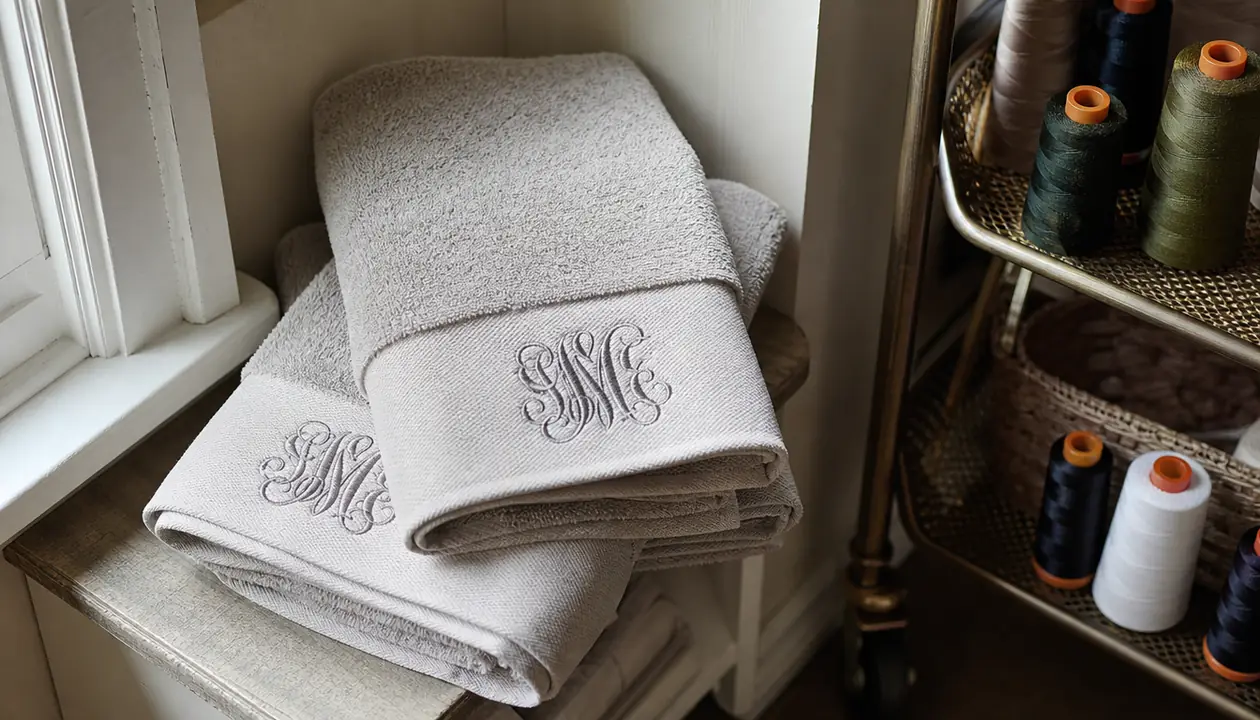
The SE1900 does not trim jump stitches for you, which is the one thing about the machine I would change if I could. When a design moves from one letter of a monogram to the next, it drags a thread across the gap. Left alone, that thread loops into the next stitch and you end up picking at the back of a bath towel with your thumbnail. With snips sitting an inch from my right hand, I cut each jump as it happens. Small motion, no thought, and the back of the towel stays clean.
You stop making trips to the kitchen drawer
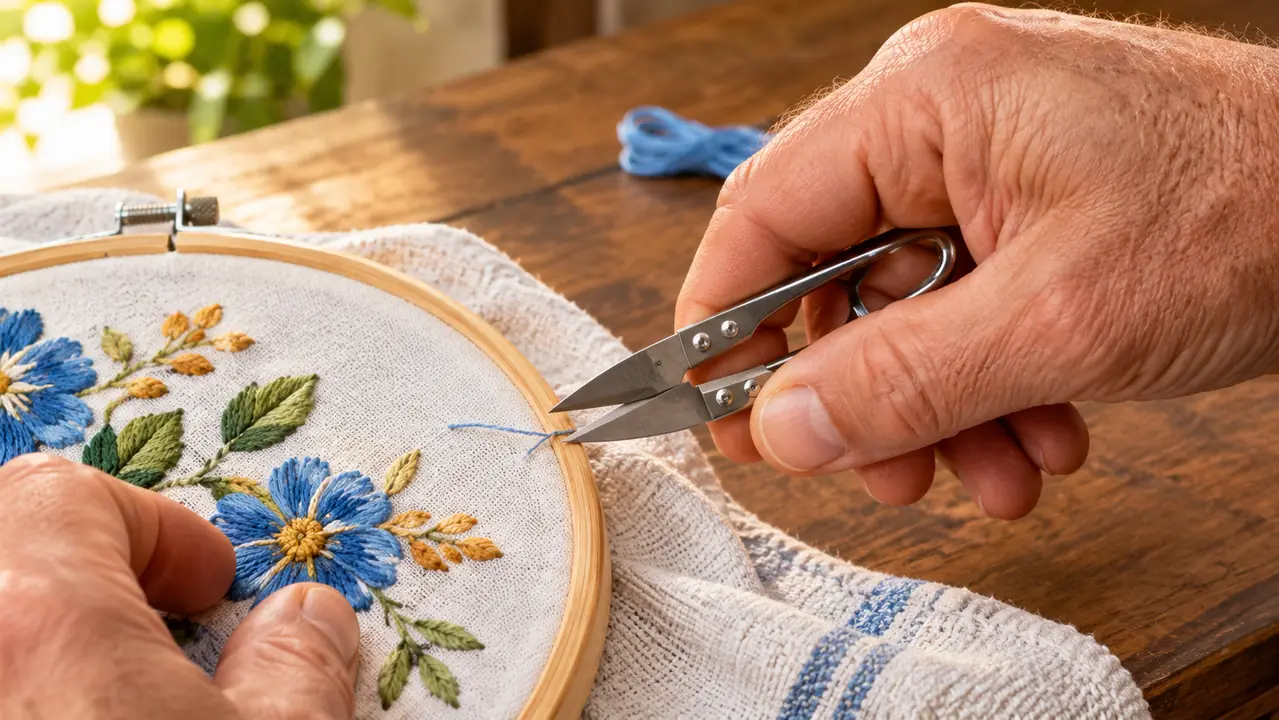
My kitchen scissors were perfectly good scissors. That was the problem. They were the nearest sharp thing for a month, so they came upstairs, and then they lived on the folding table until Dale needed them for a package. Then they vanished again. A dedicated pair tied to the machine ends that loop. In two years I have not once searched for them. The kitchen scissors went back to the kitchen and have stayed there.
Fine tips slide under a thread without grabbing fabric
This matters on a bath towel. The terry loops sit right under the design, and a blunt blade grabs them along with the jump thread. Fine tips go under one strand and nothing else. I use them on fleece too, where a wrong grab pulls a whole row of nap. It takes some getting used to if you have only handled big shears, but the precision is the entire point.
At 1.44 ounces it does not drag on the ribbon
I tied mine to the handle area with a narrow ribbon and it hangs there without pulling. I have seen people clip heavy shears to a machine and watched the clip slide down the arm all afternoon. Not this. It hangs, I pick it up, I use it, I let go, it drops back. That sounds like a small thing until you have done it several hundred times in one morning.
The rubber grip holds up through a long afternoon
By the end of a two hour session on napkins my hands are tired. That is just being 58. The rubberized handle is the reason I kept reaching for these during the first week, when the spring still felt stiff and I was not sure I liked them. Bare metal handles on inexpensive snips leave a ridge across your thumb after a while. This one does not.
One hand does the work, so the other stays on the hoop
When you cut a jump stitch, the fabric is still hooped and still under the needle. You do not want to let go of it. Spring snips open themselves, so a single squeeze closes them and letting up opens them again. I keep my left hand flat on the hoop and cut with the right. Nothing shifts, nothing needs repositioning, and the design does not move under the needle.
It works in either hand, which matters more than I expected
SINGER lists these as ambidextrous and I can confirm it. Most of the time I use my right hand. But when I lean across the table to reach a monogram on the far side of a tote bag, I switch. The snips do not care. Neither hand gets a sore spot from a handle shaped for the other one.
The ribbon means it is always in the same spot
This is a habit rather than a feature, but the snips make the habit easy. Mine hangs off a short length of ribbon at the machine handle. It has one home. When I finish a design and set the hoop down, the snips are exactly where they were. Two years in, my hand goes to that spot without me looking at it. That is the whole reason the kitchen scissors never came back upstairs.
Thread tails at the end of a name come out clean
When a name finishes, there are tails at the first letter and the last. On a hand towel for a christening or a blanket for my granddaughter Lily, those tails are the difference between a gift that looks finished and one that looks homemade in the wrong way. Fine tips get right down at the base of the stitch. I do not have to dig, and I do not have to pull the thread out from under the design.
It breaks the borrowing habit for good
The real reason to keep a pair by the machine is that the alternative is worse than it sounds. You borrow from the kitchen, you put them down somewhere upstairs, and then you are hunting for them with a hoop in your hands and a design half stitched. That was my loop for a month. Buying a dedicated pair and tying it down broke the loop, and nothing about that was complicated.
What I'd Skip
Two things. First, I would skip the fancy holster or magnetic holder until you have used the snips for a week. A short ribbon does the job and I already had one in the drawer. Second, and this is the one I would actually argue about, I would skip the idea that these replace my small curved embroidery scissors. They do not. The snips live at the machine and handle jump stitches and tails on the front of the work. The curved pair stays in the table drawer for trimming close on the back of a fleece blanket, where I need the curve flat against the fabric. Different jobs. If I could only own one, it would be the snips, because that is the job that comes up most often. But I would not throw the curved pair away, and neither should you.
Two years, one pair, one ribbon, and the kitchen scissors have stayed in the kitchen.
The pair that lives on the ribbon by the handle
SINGER ProSeries 5 inch thread snips. Stainless blades, fine tips, rubber grip, 1.44 ounces. Tied to my machine since January 2024 and I have never needed a second pair.
Amazon Check Today's Price on Amazon →