

The first pack of HBI H.B.I. PRODUCTS tear away stabilizer came home with my machine in October 2023, and I did not think about it again for months. That is the honest truth about stabilizer. Nobody researches it. It arrives with the machine, you tear it off the back of a towel, and you move on with your day. I am on my third pack now, all precut 10 by 12 inch sheets, and I have formed opinions the slow way. Most of them are good. One of them is a complaint I have said out loud in my sewing room more than once.
I embroider in the spare bedroom upstairs on a Brother SE1900. Mostly that means monograms and names on hand towels and bath towels, fleece baby blankets, canvas tote bags and cloth napkins. Friends, church people and neighbors text me small orders, and I sit at one booth at the St. Peter's holiday craft fair each December. Nothing about this is high production. When I say a stabilizer works, I mean it worked on a folding table by a window, one hoop at a time, on a Tuesday afternoon. That is the frame for everything below.
This is the review I wish I had read back then, when I still believed the machine did all the work and the sheet underneath was an afterthought. It is not an afterthought. It is roughly half the result, and nobody at the store tells you that when they hand you the box.
The Quick Verdict
Precut tear away that handles everyday towels, blankets and totes without drama. Double it for thick terry and dense monograms, and buy a water soluble topper separately.
Amazon Check Today's Price →The stabilizer I keep reordering, three packs in
Precut 10 by 12 inch sheets, 100 to a pack, meant for low to medium density designs on light and thick fabrics. This is the sheet under most of the gifts that leave this house.
Amazon Check Today's Price on Amazon →What It Actually Is
Tear away stabilizer is the sheet you hoop underneath your fabric so the stitches have something to hold onto. When the design is finished, you pull it off the back. No scissors, no trimming close, no stiff panel left behind. The HBI H.B.I. PRODUCTS pack comes as 100 precut pieces, 10 by 12 inches, in a flat pack that lives on my corner shelf. The listing calls it a fit for low to medium density designs on both light and thick fabrics, and says it is made, converted and packaged in the United States. The whole pack weighs 1.06 pounds, so it is not a box you have to make room for.
Precut is the part people skip past. A roll is cheaper by the square foot and you pay for it in time, squaring up a piece, sweeping fuzz off the table, discovering you cut it an inch short. I have a friend who buys rolls and swears by them. She is more patient than I am. I like reaching into a pack and knowing the sheet is already bigger than my hoop. With a 5 by 7 field, a 10 by 12 sheet gives margin on all four sides and room to spare around the hoop screws.
How I've Used It
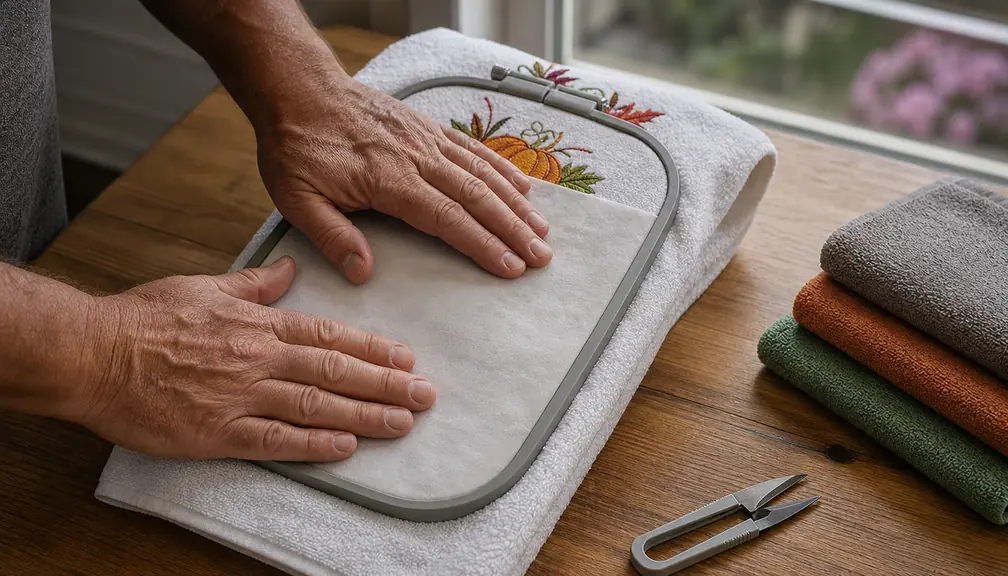
For a hand towel monogram I hoop one sheet of HBI under the towel and lay a clear water soluble topper on top. The topper is a generic roll from the craft store, not part of this pack. It does two jobs. It keeps the pile of the towel from swallowing the letters, and it gives the needle a smooth surface to travel across. For a standard bath towel, one sheet. For a thick bath towel with a dense monogram, two sheets, one laid over the other and hooped together. For fleece blankets and canvas totes, one sheet, and the item comes out of the hoop the moment the machine stops.
That covers nearly everything I make. The rest is napkins, which are thin and forgiving, and the occasional stretchy knit. I keep one generic roll of cut away mesh in the drawer for those, bought in spring 2024, and it comes out a few times a year at most. That is the only other stabilizer in the house.
Three packs in, the HBI H.B.I. PRODUCTS sheets are still what I reach for without thinking. I do not keep a spreadsheet and I could not tell you how many sheets go into a month. I can tell you a pack has lasted me about a year at my pace, which is a few items most weeks in the fall and almost nothing in July.
The honest version of my process is that I hoop, stitch, tear, and repeat, and the stabilizer only crosses my mind when something goes wrong. When it goes right, which is most of the time, I notice nothing at all. That is what a working supply feels like from the inside.
One sheet is enough for a hand towel. One sheet is not enough for a thick bath towel with a dense monogram, and I learned that on a gift rather than on scrap.
Where It Holds Up
On the fabrics I actually stitch, it does the job without fuss. Hand towels, bath towels, fleece, canvas, cotton napkins: the sheet hoops flat, holds the fabric steady, and pulls away cleanly. I have not had a design shift mid stitch with one of these underneath. I have had that happen when I hooped a towel with nothing under it at all, back in my first week, when I did not know better.
The tear itself surprised me. You pull and it comes away in strips, roughly following the stitching instead of fighting you. There are always little islands left inside the design, and those need a hand, but the bulk of the sheet is gone in seconds per item. On a run of eight napkins for a church supper last fall, the whole lot came out of the hoops and out of the stabilizer in a few minutes instead of an afternoon with scissors.
It stores well too, which sounds like a small thing until you have had a roll go soft and wrinkly on you. The pack sits flat on the corner shelf. No curling, no damp corners, nothing to unroll and fight with. My sewing room gets dry winter heat and I have not had a single sheet come out of that pack warped.
The edges are the quiet test. A sheet that frays as you hoop leaves threads hanging under the fabric, and you find them later when you turn the towel over in front of someone. These hold their edge through hooping and through the stitching, and when they finally let go they let go where they were meant to.
What Nobody Tells You About Pulling It Off
Tear away tears in one direction and shreds in the other. Pull along the line of the stitching and it comes off in a clean strip. Pull across it and you get a shower of little pieces and a back that looks chewed. Nobody at the store mentions this. You learn it on the back of a gift or you learn it on scrap, and I would rather you learned it here.
The order of operations matters too. Tear the stabilizer away while the fabric is still in the hoop, not after you take it out. The hoop is holding everything flat and supported. Take the towel out first and the fabric relaxes, the stitches loosen their grip on the sheet, and the tear goes ragged. Hold the fabric down with your free hand, pinch the stabilizer close to the stitches, and pull with steady pressure rather than a yank.
Work around each letter rather than trying to take the whole design in one pull. Small letters hold onto small pieces, and the sheet will follow the path of least resistance, which is never the path you wanted. Slow is faster here. Two small pulls beat one heroic one.
There will be bits left in the tight spots, particularly inside small letters and under dense satin stitching. I pick those out with the tip of my curved embroidery scissors, the small pair in the table drawer, or with the snips hanging on their ribbon by the machine. It takes about a minute per item. I have stopped thinking of it as a flaw in the product and started thinking of it as part of the job, the same way trimming jump stitches is part of the job.
One more thing nobody says out loud: tear away leaves a slightly stiff hand to the back of the work until the item is washed. On a tote that someone carries against their side, that is a small difference. On a folded towel in a guest bathroom, nobody will ever notice. On a baby blanket, I tear away everything I can and wash the blanket before it goes out the door.
The One Thing That Annoys Me
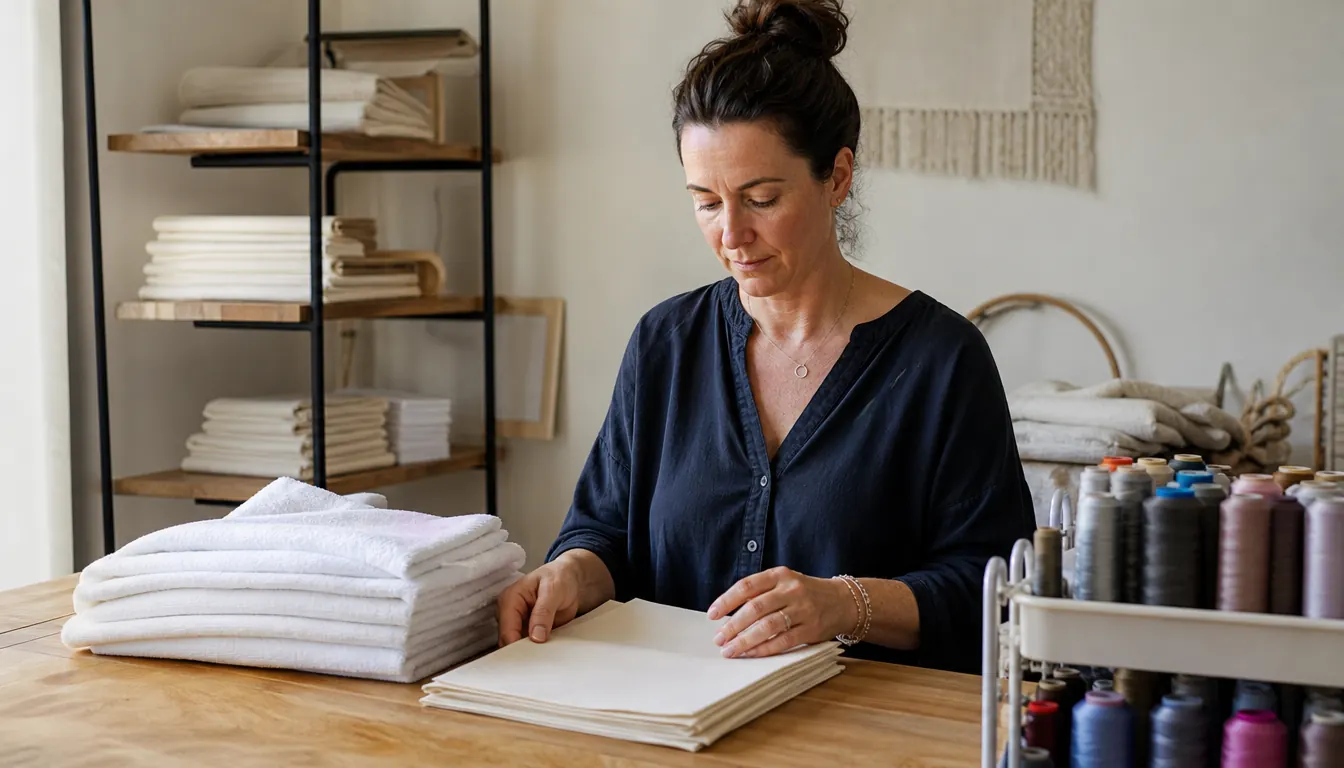
Here is my actual complaint, and it is the only one I have. A single sheet under a thick bath towel with a dense monogram is not quite enough. The stitches pull, the towel puckers under the design, and the monogram sits down into the terry instead of on top of it. The first time it happened I assumed I had hooped badly. I had hooped fine. I had under stabilized, and there is a difference.
Doubling fixes it. Two sheets, one laid over the other, hooped together under the towel. Same design, flat and crisp, no puckering, no pulling. I resisted doing this for longer than I should have, mostly because using two sheets where one seemed meant to do felt like waste. It is not waste. It is what the sheet needs on that fabric, and the difference in the finished towel is not subtle.
The pack says low to medium density, and I should have taken that at face value instead of deciding my own monograms counted as medium. A stacked monogram in thick satin stitch is not medium. On hand towels, napkins and fleece, one sheet is right. On heavy terry with dense stitching, two. That is the entire adjustment, and it costs me one extra sheet on the heaviest towels, which over a year is not a number worth losing sleep over.
I would rather have a sheet that is honest about its weight and doubles when I need it than a heavier sheet that fights the needle on a thin napkin. That is the trade the maker chose and I think it is the right one. It does mean the pack is not a one sheet fits everything answer, and the label does not say so in plain words.
Where the Cut Away Roll Fits In
Tear away is my default for towels and blankets because the back of the item matters. A guest picks up a hand towel by the corner. If there is a stiff mesh panel back there, they feel it, and the towel looks unfinished even when the stitching is perfect. Tear away disappears. Cut away does not, which is exactly why it is the right choice for the few knit items I make and the wrong one for almost everything else.
If you are buying your first stabilizer and you do not know which way to go, buy tear away. It handles towels, blankets and totes, which is what most home embroiderers actually stitch. Add a cut away roll later if you start on stretchy knits or anything that will be worn and pulled. You will not need much of it, and you will be glad it is in the drawer when you do.
What I Liked
- Precut 10 by 12 inch sheets fit a 5 by 7 hoop with margin on every side
- Tears away in clean strips on towels, fleece, canvas and cotton
- One pack goes a long way at a hobby pace, about a year for me
- Sits flat on a shelf with no curling or softening
- Holds fabric steady through monograms and small designs without shifting
Where It Falls Short
- A single sheet is too thin for dense designs on thick towels, so I double it
- Small islands inside letters still need picking out with snips
- Sold as low to medium density, which is a real limit and not a suggestion
Who This Is For
Home embroiderers doing ordinary work: names and monograms on towels, small designs on fleece blankets, totes and napkins. If you have a 5 by 7 field machine and you stitch gifts and small orders for people you know, this pack will sit under nearly all of it and you will forget it is there, which is the highest compliment I can pay a supply. It is also a sensible first stabilizer if you are starting out and do not yet know what you like.
Who Should Skip It
If you mostly stitch dense designs on thick fabrics, you will go through two sheets per hooping and 100 sheets will not carry you the way it has carried me. Look at a heavier weight tear away instead. If your work is mostly stretchy knits, shirts or anything worn against the skin, cut away is the better tool and this pack will frustrate you. And if you run a production setup where every second counts, a roll and a cutter may suit your table better than precut sheets. For a hobby table like mine, precut is the sensible choice.
Three packs and three years later, my opinion has not moved. It is a good everyday tear away with one honest limitation, and the limitation is solved by using two sheets. If that sounds like faint praise, it is not. Most of what I buy for this hobby I stop noticing after a month because it is fine. Very little of it stays in the drawer for three years and gets reordered twice.
Three packs in, and it is still the sheet I reach for first
Precut 10 by 12 inch tear away, 100 to a pack, made for low to medium density designs on light and thick fabrics. Double it for thick terry and dense monograms and it behaves like a heavier sheet.
Amazon Check Today's Price on Amazon →